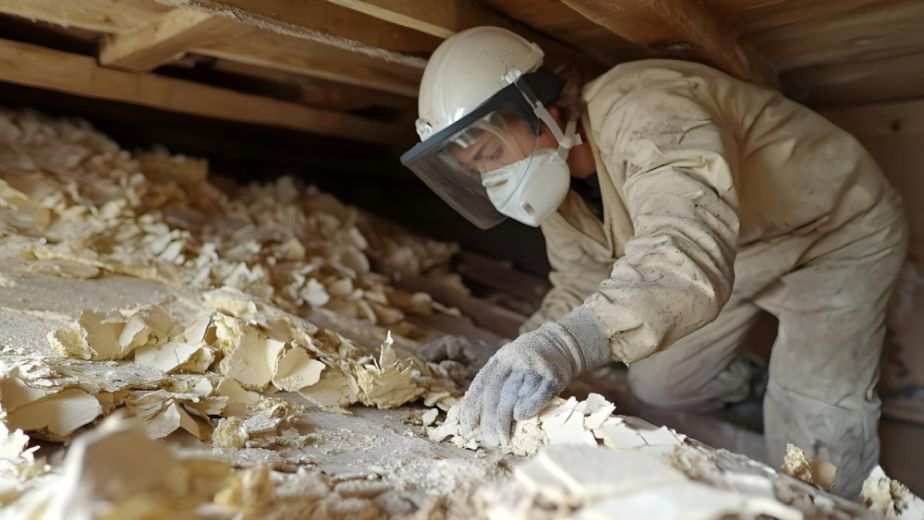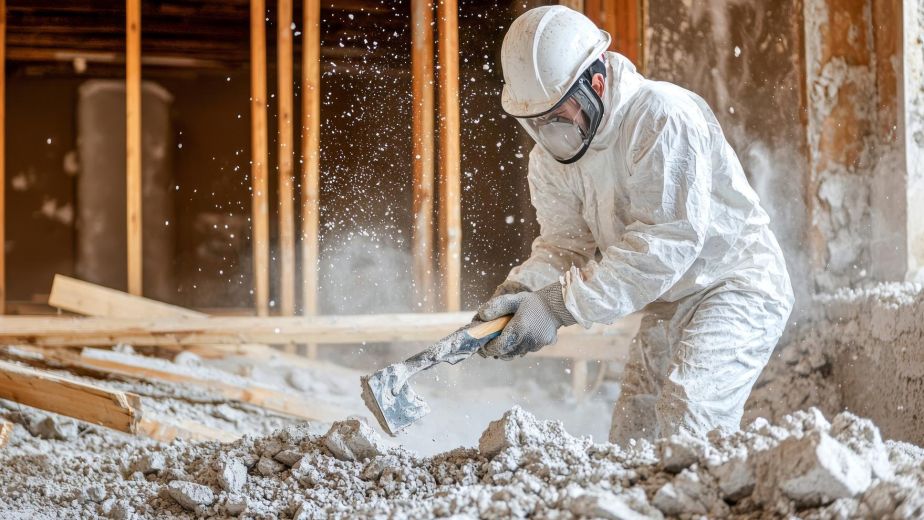


Quick Summary
Asbestos work in Massachusetts runs on two tracks: MassDEP oversees air quality and disposal, and DLS oversees licensing and worker safety. A ten-working-day notification comes first, followed by licensed crews, sealed containment, and documented waste handling. Skipping any step can bring penalties and costly cleanup. Homeowners who plan the paperwork early avoid delays and keep renovations on schedule.
A renovation plan can move along nicely until someone finds old pipe wrap in the basement or a brittle floor tile under the carpet. At that point, asbestos abatement in Massachusetts comes under state oversight, and the paperwork can matter as much as the work itself. The rulebook is 310 CMR 7.15, and it shapes when a project can start, who can perform it, and where the waste ends up.
At New England Surface Maintenance, we follow these rules for homes, schools, and municipal buildings, and homeowners often ask how the process works before they hire anyone. The regulation reads like legal text at first glance, yet its main ideas are easy to follow in plain language.
What 310 CMR 7.15 Covers for Asbestos Abatement in Massachusetts
310 CMR 7.15 is the part of the state air quality rules that deals with asbestos. MassDEP, the Department of Environmental Protection, wrote it to keep fibers out of the air during demolition, renovation, and repair work. The regulation applies to nearly every type of building, from single-family homes to schools and commercial spaces.
The rule defines abatement broadly. It covers removal, encapsulation, demolition, repair, handling, transportation, and disposal of asbestos-containing material. Work that only disturbs a material, such as cutting into a wall or drilling through old flooring, can also trigger requirements.
Massachusetts runs a second track alongside it. The Department of Labor Standards, known as DLS, regulates worker safety and contractor licensing under its own asbestos rules. The two agencies work in parallel, so a single project must comply with both. Together, these rules form what people commonly call Massachusetts asbestos law, and a project that satisfies one agency still needs to satisfy the other.
Professional asbestos removal services handle both sides of the paperwork, and homeowners can ask a contractor to explain which filings apply before signing a contract.
MassDEP Asbestos Notification: Who Files and When
MassDEP asbestos notification is the first formal step on a regulated project. Submit the Asbestos Notification Form to the agency at least ten working days before work begins. Working days leave out weekends and holidays, so the wait usually stretches past two weeks on the calendar. DLS also requires notice, and the same form can notify both agencies.
A few points help homeowners follow the process:
- Contractor: The abatement contractor typically files the form on the owner’s behalf.
- Property owner: Owners remain responsible for the property and can request a copy of the filing before work starts.
- Start date: Work begins only after the waiting period ends, and a changed start date calls for a revised notification.
- Fees: Owner-occupied homes with four or fewer units are typically exempt from the notification fee.
- Emergencies: A waiver of the waiting period exists for urgent situations, and it requires approval before work starts.
Timing deserves attention in dense markets. Homeowners planning asbestos removal in Boston often juggle contractor calendars, permit schedules, and move-in dates, and the ten-day wait can affect all of them. Filing early keeps a renovation on track, and a late filing can push the start date back by weeks.
Licensed Abatement Contractors and DLS Requirements
Massachusetts requires a license for contractors who perform regulated asbestos work, and DLS issues it. The license includes training standards for workers and additional accreditation for supervisors. Insurance and safety programs also factor in. A company’s license number appears on its notification forms and proposals, and homeowners can look it up with DLS in a few minutes.
Rules for owner-occupied homes leave some flexibility for owners working on their own property. Work practices and waste rules still apply in those cases, so a homeowner considering a do-it-yourself approach should check with MassDEP and DLS before disturbing any material. Brittle material handled without containment can spread fibers through living spaces and into ductwork, and cleanup after a release costs far more than a planned project.
Homeowners can protect themselves with a few questions. Ask for the license number, confirm it with DLS, and request proof of insurance. Ask who files the notification, who arranges waste disposal, and who schedules independent clearance testing. We welcome those questions because they show a homeowner is paying close attention to the process.
Containment and Work Practice Standards
The regulation’s work practice rules aim at one outcome: keeping fibers out of the air. A regulated project usually follows a set of steps that protect occupants, workers, and neighbors:
- Wet methods: Amended water keeps material damp so fibers do not become airborne during removal.
- Sealed work area: Plastic sheeting and barriers separate the work zone from the rest of the building.
- Negative air: HEPA-equipped machines pull air through filters and hold the work zone at lower pressure than the spaces around it.
- Decontamination: Workers clean and change gear in a controlled area before leaving the zone.
- Material-specific methods: Roofing, siding, window glazing, cement shingles, and asbestos cement pipe each have their own removal practices.
- Cleanup: HEPA vacuums and wet wiping replace dry sweeping.
These steps explain why abatement takes patience. Setup and teardown can take as long as the removal itself, and the time protects people near the site. Exterior work follows different methods than interior pipe wrap or plaster, so a contractor picks the practice the regulation assigns to each material. Independent air testing often follows on larger projects, and a third party performs it so the result carries weight.
Waste Handling and Disposal Rules
Removal is only half of the job. Asbestos-containing waste must follow a documented path from the work zone to an approved disposal site. Workers seal debris in leak-tight containers or heavy bags and label them with the required warnings. A licensed hauler then carries the waste to a facility permitted to accept it, and waste shipment records follow the load.
Curbside trash and standard transfer stations do not accept regulated asbestos waste. Placing debris in household trash violates the rules and puts sanitation workers at risk. Projects on the South Shore, including asbestos removal in Plymouth, follow the same disposal chain as jobs in Boston or the North Shore.
Documentation matters after the job ends. Homeowners can ask for copies of waste shipment records, and those papers can help during a home sale or an insurance conversation. A separate disposal notification may apply when waste comes from work that didn’t require advance notice, so paperwork can still come up even on small projects.
Penalties for Doing It Wrong Under Massachusetts Asbestos Law
Starting work before the waiting period ends counts as a violation, and MassDEP can respond with enforcement action, including financial penalties. Administrative penalties can add up over time, and both agencies can pursue contractors who skip notification, ignore work practices, or mishandle waste. A contractor’s license can face consequences too, and a property owner may share responsibility when a project proceeds without proper filings.
Penalties are only part of the cost, as improper work can spread fibers through a home. Cleanup after a release often costs far more than the planned project. Buyers, lenders, and inspectors may ask questions later, and missing paperwork can slow a sale.
A homeowner researching asbestos removal in Ipswich will find colonials and farmhouses where original plaster, pipe wrap, and flooring often stay hidden behind later renovations. Those materials deserve a careful look before any wall comes down.
We have kept a clean record with regulators, and it comes from treating notification, work practices, and disposal as one continuous job. A shortcut in any one of them can undo the other two.
Plan the Paperwork Before the Project Begins
310 CMR 7.15 sets the order of operations for asbestos work in Massachusetts: notify MassDEP, use a licensed contractor, follow containment rules, and document disposal. Homeowners who learn that sequence early can schedule renovations with fewer delays and fewer surprises. Choose a contractor willing to explain each filing in plain terms.
Have a renovation on the calendar and a question about the paperwork? Contact our office, and we will walk through the timeline with you.
Massachusetts Asbestos Regulation FAQs
The waiting period is ten working days after a complete filing. Incomplete forms can be returned and are not valid until corrected, so accurate details matter. A waiver exists for emergencies and requires approval before work begins.
Regulations generally call for identifying asbestos-containing material before demolition or renovation that could disturb it. A licensed inspector collects samples and sends them to a laboratory. Results guide the scope of work and help you avoid removing materials that test clean.
Small, well-contained jobs in a basement or attic sometimes allow families to stay in other parts of the home. Larger projects or work near ductwork may call for a short stay elsewhere. Ask your contractor about containment and airflow before the start date.